Book Review: “Dirt Poor Islanders” by Winnie Dunn
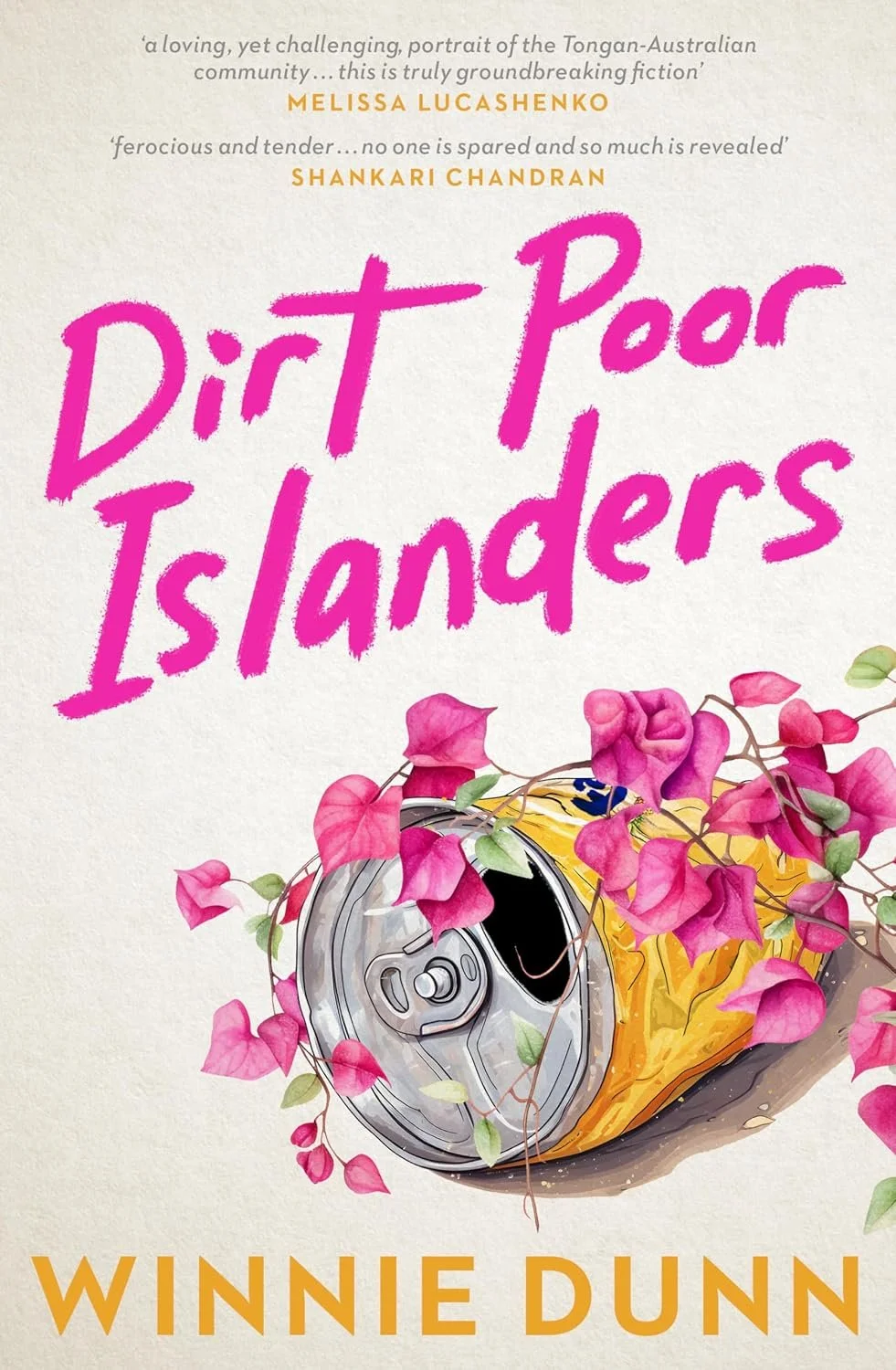
Håfa adai! May is Asian American/Pacific Islander (AAPI) Heritage Month in the United States. For May 2026, I will post reviews of books written by AAPI authors that may retell important past experiences, create alternate worlds or universes, or portray futuristic stories centering Pacific Islander and Asian American communities. My first selection of AAPI Heritage Month 2026 is Dirt Poor Islanders by Winnie Dunn.
This book review consists of two parts: a spoiler-free plot summary and my thoughts on the story. In the second part, I give my personal rating and break down the setting and worldbuilding, storytelling, cast of characters, and themes. There may be some lightweight spoilers—such as how characters interact with each other and the world around them—but I will not give away any major plot twists or endings. I want to share my opinions of the book and maybe encourage you to purchase a copy of your own.
Click on the tags at the bottom of this post to see all reviews with the same tags in the Fiction bookshelf.
Spoiler-Free Plot Summary
Meadow Reed’s mother and father are both half Tongan half White. If 50% plus 50% makes 100%, that makes Meadow 100% Tongan and 100% White. Right? It may not make sense to her neighbors and classmates throughout the Western Sydney town of Mt. Druitt, but it makes sense to her! And as she grows up in Australia — surrounded Pālangi (White people) who believe they are better than the Indigenous islanders around them — that steadfast sense of self will be challenged as she navigates being Tongan and White in Australia, growing up with many motherly figures but no mother, and doing everything together while learning to be whole on her own.
My Thoughts on Dirt Poor Islanders: 4.75 stars
Dirt Poor Islanders explores themes of diaspora, identity, poverty, grief, and blended family dynamics. Through these themes, I finished the story with four major takeaways. First, the formation of community within diaspora can connect you to your ancestral homeland, but it does not necessarily prepare you to return to that homeland. Born and raised in Western Sydney, Australia, Meadow Reed’s blended Tongan/White family do everything together to establish a strong sense of what it means to be Tongan outside of Tonga. They eat Tongan food, listen to Tongan music, hear Tongan, and practice Tongan tradition. Yet when she finally goes to Tonga, Meadow feels as if the island, its people, its food, and its places reject her.
Second, standing between two different worlds can leave you feeling like you cannot be a part of either. Meadow must balance being Tongan in Australia, being Tongan and White, and doing everything together while oftentimes feeling alone. For her, this has a push-pull effect between contradictory ways of being. As she gets older, she realizes she is not the only one in her family with such internal conflict. Third, the collision of cultural expectations and personal identity can force some to live in secrecy. For one of Meadow’s aunts, also name Meadow, meeting the expectations of traditional Tongan culture mean that she must hide a fundamental and undeniable part of herself.
Fourth, the love among blended families can be mingled with grief and guilt. Her grandmother and aunties surround Meadow and her younger siblings after the death of her mother, doing their best to provide guidance and structure to the young children, but never wanting to replace their lost daughter and sister. When her father eventually remarries and has more children, Meadow’s stepmother does her best to provide love and care, knowing that she is not there to replace her mother. The love meadow feels for these women is complicated. The absence of her mother cannot be escaped, and at times she and her aunties feel a pang of guilt for the bond they built because of that absence.
The overall rating I give to Winnie Dunn’s Dirt Poor Islanders is 4.75 out of 5 stars. I truly enjoyed Winnie Dunn’s debut novel! Her writing is emotional and fierce, and her storytelling vivid and nuanced. Meadow Reed is a highly relatable protagonist. Scene after scene, I felt that she was speaking to many of my own experiences. There were times when the pacing felt a bit slow or off in some way. I highly recommend Dirt Poor Islanders to anyone who wants to experience a coming-of-age story about the complexities of growing up between worlds, belonging to both, yet fitting in to neither.
Dångkulo' na' saina ma'åse'! Thank you so much for reading my review of Dirt Poor Islanders by Winnie Dunn.
Post Date: 25 May 2026
Rating Cheat Sheet
4.75 - 5.00 stars: As many people as possible should read this book!
4.00 - 4.50 stars: I appreciated many aspects of this book. I recommend it!
3.00 - 3.75 stars: I liked some aspects of this book. I will not revisit it, but someone else might really like it.
2.00 - 2.75 stars: There were some things I appreciated about this book, but I do not recommend it.
0.25 - 1.75 stars: I do not recommend this book! I did not enjoy or appreciate the experience of it!
Published: 27 March 2024
Publisher: Hachette Australia
More Books from Pacific Islander Authors